
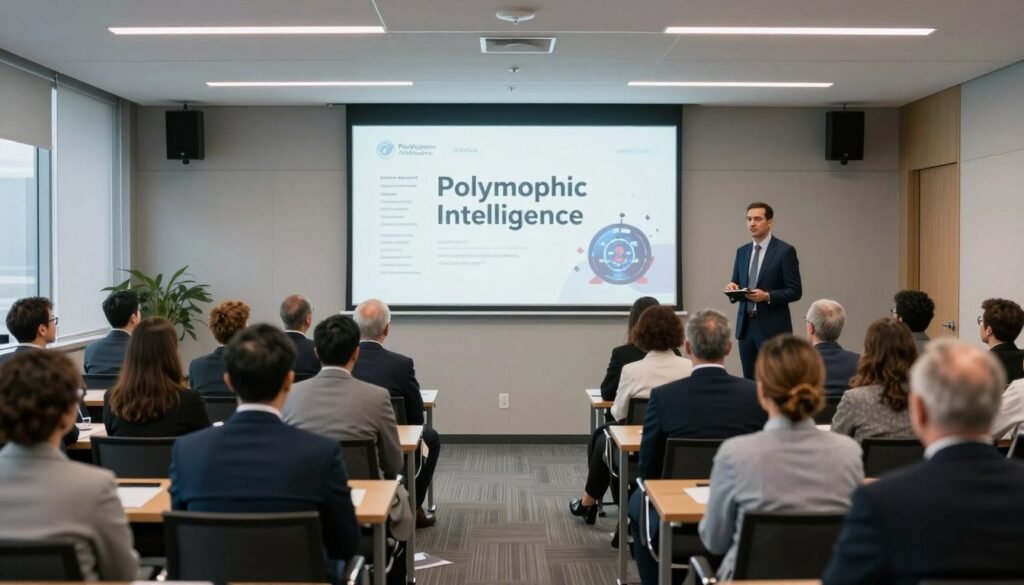
Did you know some groups spot problems earlier than others?
In almost every industry, some people seem to see trouble coming before everyone else.
It’s not because they have secret data or better tools.
Most of the time, they’re looking at the same information everyone else has.
The difference is that they pay attention to small, easy-to-ignore signals — early signs that something is changing — instead of waiting for clear proof or popular opinion.
When things go wrong, looking back often reveals the same pattern:
- The clues were there
- A few people noticed
- Most brushed them off as noise
By the time a problem becomes obvious, options are limited, and decisions get expensive. Let us help.
The Prediction Oracle uses Polymorphic Intelligence to identify hidden signals and make sense of large volumes of data. It turns unclear information into better steps we can take.
Thanks to generative AI and our unique data analysis methods, we can see what’s coming sooner. We make what’s uncertain clearer.
Key Takeaways
- The Prediction Oracle uses advanced technologies to deliver actionable insights.
- It detects weak signals and analyzes data exhaust to provide decision-grade intelligence.
- Generative AI and data analytics are key components of the Prediction Oracle.
- This system helps organizations anticipate problems more effectively.
- The Prediction Oracle turns unclear information into clearer steps we can take.
Most systems hide uncertainty.
Traditional forecasting often hides uncertainty. This makes decisions slow and opportunities missed. Most failures happen because important weak signals were ignored.
The Limitations of Traditional Forecasting
Traditional forecasting uses popular data and misses insignificant events. It presents the consensus forecast, concealing uncertainty.
- They also don’t incorporate diverse reasoning lenses.
- They fail to consider competing hypotheses.
- They often don’t self-correct based on new information.
Why We Need a New Approach
The Prediction Oracle changes forecasting by showing uncertainty. It lets users see the future with clearer uncertainty. This way, they can make relevant decisions.
This helps users:
- Find outcomes sooner.
- Make decisions with clearer insights.
- Build stronger strategies by thinking of many possibilities.
The Prediction Oracle doesn’t predict the future with certainty. It helps users understand uncertainty so they make better choices.
This approach is grounded in Uncertainty-First Decision Theory, which treats uncertainty as an informational asset rather than an obstacle to decision-making.
What is Polymorphic Intelligence
Polymorphic Intelligence is a new way to make intelligent systems. It uses many ways to think and learn. This makes it better at producing correct answers by combining different ideas.
It’s different from old systems that are rule-based and don’t change much. As explained in the book Prediction Machines by Agrawal, Gans, and Goldfarb, it’s more of an if, if, if, then rather than an if, then, then, then.
Instead of waiting for one strong “if,” we want many earlier, weaker ifs:
- If this trend continues…
- If these signals are connected…
- If this scenario plays out…
- Then here are the options we should prepare for.
Core Principles and Definition
Polymorphic Intelligence has a few main ideas. It uses many ways to think, different ideas, and keeps getting better. These help you make wiser choices in challenging situations.
Here’s what makes Polymorphic Intelligence special:
- It looks at problems from many angles.
- It tries out different reasons for things.
- It combines ideas from different models.
- It keeps getting better with new information.
The Evolution from Traditional Intelligence Systems
Old systems use just one way to think. But Polymorphic Intelligence is new. It uses many ways to think and learn.
Here’s how Polymorphic Intelligence is different:
| Characteristics | Traditional Intelligence Systems | Polymorphic Intelligence |
|---|---|---|
| Reasoning Approach | Single model or approach | Multiple reasoning lenses |
| Hypothesis Handling | Limited to a single hypothesis | Competing hypotheses |
| Adaptability | Static models | Continuous self-correction |
Polymorphic Intelligence is better at handling tough situations. It’s more flexible and innovative.
The Prediction Oracle Framework
The Prediction Oracle is a new way to see into the future. It uses a mixture of frameworks to turn uncertainties into strategies. It finds hidden clues, looks at old data, and gives multiple options rather than recommendations.
System Architecture Overview
The Prediction Oracle uses proprietary algorithms to analyse multiple data types. It looks at 100s of sources to find patterns and oddities. This helps spot small signs of big changes to come.
Its design is flexible and grows with new data and needs. It uses powerful algorithms to quickly sort through large amounts of data. This gives users the info they need to make better choices.
Weak Signal Detection Methodology
The Prediction Oracle has a special way to find weak signals. It looks at old data from many places to find small clues. This lets users act early on upcoming big changes.
This method uses machine learning to get better over time. It mixes human smarts with computer power. This makes the Prediction Oracle very good at finding and understanding weak signals.
The Four Pillars of Polymorphic Intelligence
Our Polymorphic Intelligence focuses on four primary areas. These areas help us understand things better. They work together to make decisions, drawing on multiple perspectives and advanced algorithms.
Multiple Reasoning Lenses
The first part looks at data in many ways. This lets us find things we might miss. It helps us see what’s coming and make wiser choices.
Competing Hypotheses Framework
The second part looks at many possible reasons for things. It helps us understand better by looking at all sides. This way, we don’t miss important points.
Ensemble Convergence
The third part combines different views to get a clearer picture. It helps us see patterns and trends that one view might miss. This makes our insights more reliable.
Continuous Self-Correction
The last part keeps our system up to date with new info. It makes sure our predictions stay accurate. This is key in changing situations.
Together, these four parts make Polymorphic Intelligence very powerful.
How The Oracle Transforms Noise into Decisions
The Prediction Oracle is at the center of our decision-making. It turns data into choices we can act on. It gives us options based on uncertainty, helping us make better decisions.
Decision Variables: Identifying What Actually Matters
The Oracle finds the most critical factors in data. It helps us focus on what really matters in our choices.
In business, this could include market trends, customer behavior, and financial matters. Knowing these helps us see what drives our decisions.
| Decision Variable | Description | Impact on Decision |
|---|---|---|
| Market Trends | Analysis of current and forecasted market conditions | High |
| Customer Behavior | Understanding customer preferences and purchasing patterns | Medium |
| Financial Indicators | Review of financial metrics such as revenue and profitability | High |
Actionable Options vs. Recommendations
The Oracle offers choices we can act on, not just suggestions. This is key because it lets us pick what’s best for us.
For example, it might show different ways to solve a problem. It tells us the risks and benefits of each. This helps us make choices that fit our needs.
Risk and Governance Constraints
The Oracle also looks at risks and rules. This makes sure our choices are better and follow the law.
By thinking about risks and rules, we avoid problems. Our choices then match our goals and values.
Implementing a Polymorphic Intelligence System
A successful Polymorphic Intelligence system takes time to set up. The Prediction Oracle system is complex and has taken months of work to develop and test the current frameworks.
To set up such a system, we must first consider the technical requirements and design. This means choosing the hardware and software, designing and implementing all necessary integrations, and ensuring it can scale and remain reliable.
Technical Requirements and Architecture
Building a Polymorphic Intelligence system requires more than raw computing power. It demands an architecture capable of handling complex, often incomplete data; coordinating multiple reasoning methods; and integrating large language models in a way that preserves disagreement rather than collapsing it.
The system must support:
- Efficient computation for iterative analysis
- Reliable data storage for signals, assumptions, and outcomes
- Flexible software orchestration to run multiple reasoning lenses in parallel
- Careful model coordination so outputs can be compared, challenged, and refined
Joe has designed and implemented this architecture end-to-end in his own lab.
Working hands-on, he has:
- Built the compute environment needed to run and orchestrate multiple models
- Designed data structures that preserve uncertainty, provenance, and history
- Implemented software pipelines that allow different reasoning approaches to operate side-by-side
- Ensured the system can evolve as models, data sources, and use cases change
This work goes beyond theory. It represents a fully functioning, real-world implementation of polymorphic intelligence—tested, iterated, and refined through practical experimentation rather than abstract design alone.

Early Warning Capabilities for Black Swans
The Prediction Oracle can also help manage the risks posed by black swans. This is key in our world today. Unexpected events can cause significant problems.
Detecting Regime Shifts Before They Happen
By analyzing weak signals, the Prediction Oracle can spot changes before they happen. These changes, called regime shifts, can significantly affect outcomes. It finds early signs of these shifts, helping users get ready.
Finding these shifts means looking at complex data patterns. The Oracle uses its proprietary frameworks to spot these patterns. This gives users a chance to act fast.
Black Swan Event Anticipation
Black swan events are rare but have significant effects when they happen. The Oracle aims to spot these events early. It finds the minor signs that come before them.
From Early Warning to Rapid Response
Getting warnings early is just the start. Being able to act fast is also key. The Oracle helps by providing clear options and guidance on important decisions.
The Oracle can help organizations better handle foreseeable surprises. It finds early signs and warns users. This makes managing risks more effective.
Real-World Applications and Case Studies
The Prediction Oracle is still in beta, but you can review samples of Trend, Prediction, and Focus reports we have generated on various topics, technologies, and industries online. Judge for yourself how well it works. Human feedback is what will make it better.
Our sample reports include options for making business decisions, planning policies, and preparing for what might happen. Let’s look at how it works in these areas.
Strategic Business Decision-Making
In business, the Prediction Oracle is invaluable. It looks at lots of data and finds patterns. This helps companies make wiser choices about money, trends, and risks.
Policy Planning and Governance
The Prediction Oracle is also suitable for making policies. It shows what might happen with different choices. This helps committees make better, lasting policies.
Planners can use it to see how different economic plans would work. The Oracle’s Strategic Insights section of the prediction report can help pick the best plan.
Complex Systems
The Prediction Oracle is also useful for dealing with complex systems. This includes topics such as environmental stewardship, public health, and building design.
Conclusion: The Future of Decision Intelligence
Looking ahead to 2026 and beyond, the Prediction Oracle is leading the way in decision intelligence. It changes how we make choices by showing us what’s uncertain. This gives us a deeper look into possible outcomes.
The Prediction Oracle’s abilities help get us ready for what can happen. This makes it a powerful tool for making big decisions. It opens up new options and choices we may have ignored and helps us deal with a constantly changing world.
The Prediction Oracle is set to play a role in the future of decision intelligence. As we keep improving it, we’ll keep you posted in our blog.
FAQ
What is Polymorphic Intelligence, and how does it relate to the Prediction Oracle?
Polymorphic Intelligence is a process that uses many ways to think and keeps improving itself. The Prediction Oracle uses Polymorphic Intelligence in its frameworks to provide better insights for decision-making.
How does the Prediction Oracle surface uncertainty, and why is it important?
The Prediction Oracle shows uncertainty by clearly exposing it. This helps users make better decisions faster.
What are the limitations of traditional forecasting methods, and how does the Prediction Oracle address them?
Old forecasting methods often hide uncertainty. The Prediction Oracle shows it. It uses frameworks to give valuable insights.
What are the 4 pillars of Polymorphic Intelligence, and how do they work together?
The four pillars are multiple ways to think, competing ideas, coming together, and continually improving. They work together to provide better insights by considering different perspectives.
How does the Prediction Oracle transform noise into decisions?
The Prediction Oracle doesn’t ignore noise; it turns noise into decisions by identifying key variables, offering options, and considering risks. This is like the person in the room who has the correct answer, but nobody listens to them.
What are the technical requirements for implementing a Polymorphic Intelligence system?
To set up a Polymorphic Intelligence system, you need to understand how they work. You need someone with the right skills.
How does the Prediction Oracle detect weak signals, and why is it important?
The Prediction Oracle’s system uses a tested framework that finds weak signals. This is a key feature Joe has developed.
What are some real-world applications of the Prediction Oracle?
The Prediction Oracle can be used in many areas, such as business planning, policy-making, and managing complex systems. It’s useful because it gives clear insights.
How will the Prediction Oracle shape the future of decision intelligence?
The Prediction Oracle is still in beta, but we will continue to improve and look forward to opportunities to demonstrate our usefulness in 2026 and beyond. Its role in giving decision-makers the best options will be key to our future.